
Reception

Miss Simpkin-Teacher/Keyworker
Miss Oxley-LSA
Start time – 8:40am Pick-up time - 3:15pm
Welcome to Reception!
Summer 1, 2026
We are so excited to learn lots of new things this year and work together to support each child’s learning journey. If we can do anything to help or answer any queries, please contact us at foundationstage@cpa.dsat.education
Click the link below to find out what we will be learning through the year:
Reception Long Term Plan 25-26
Our theme this half term is Food & Farming!
This half term we will be using our core stories to develop our use and understanding of new vocabulary words.
Core Texts:
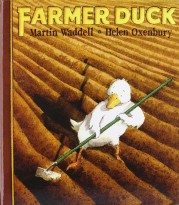
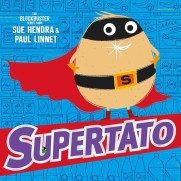
Our 2 stories to focus for this half term are 'Farmer Duck' and 'Supertato'. We will be learning new vocabulary within both of these stories.
Literacy & Phonics

The children will take part in daily RWI lessons to identify sounds and learn to blend and segment. Children will be given a phonics key ring including the sounds they have been taught and weekly speed sound formation sheets.
Please send your child to school with a book bag every day so that they can keep their phonics book, library book and key ring safe.
Children have now been assessed and grouped based on their recent assessments- copies of assessment details were sent home and new book bands have been allocated.
Book changing day is every Thursday
Thank you for coming to our Reception and Early Reading meeting- the presentation is attached below. Any questions, please ask!
Maths
At Canon Popham, we follow maths mastery approach. This half term, our maths units are 'to 20 and beyond' and 'how many now?'
To 20 and beyond: In this small step, children continue to build and notice patterns with numbers beyond 10 (up to 13). We provide opportunities for children to recognise that the numbers 1 to 3 repeat after every full ten. So, they have 1 ten and 1, 1 ten and 2, 1 ten and 3. It is important to embed this skill with numbers to 13 first, before going up to 20. Children then focus on the process of counting and the numerical patterns beyond 20. Provide many opportunities for verbal counting beyond 20, pausing at each multiple to draw out the structure. We then build on verbal counting beyond 20 by noticing the counting patterns involved. We provide calendars, hundred squares or number tracks, both inside and out, either painted or marked out on the ground. This will support children to become familiar with 2-digit numbers beyond 20 and to start to spot the patterns within them. It is important that this skill should still remain fun and active, so that children are eager to count.
How many now?: children build on their understanding as they explore the change structure of addition (augmentation) by adding more. The focus for this step is on increasing a quantity by a given amount, while continuing to work within 10 Children will use real objects to see that the quantity of a group can be changed by adding more. The ‘first, then, now’ structure is a very effective way to help build their understanding by creating mathematical stories in meaningful contexts. , We then continue to develop their understanding of the subtraction change structure by taking away. Children have already explored finding the answer to “How many are there now?” To add challenge, provide children with ‘first, then, now’ number stories where the ‘then’ part is missing. For example, “There were 5 children on the bus, then we don’t know how many got off, but now there are 2 children.”
These are the key facts taught throughout Summer 1 to practise with your child at home:
Reception Key Instant Recall Facts-Summer 1
Reception Key Instant Recall Facts-Spring 2
Reception Key Instant Recall Facts-Spring 1
Reception Key Instant Recall Facts-Autumn 2
Reception Key Instant Recall Facts- Autumn 1
Understanding the World
The Foundations Of:
RE – Believing & Belonging: How do we understand and care for the world? Recognise that people have different beliefs. Explore the natural world and a sense of wonder and awe. Describe what they see, hear and feel whilst outside using their senses. Develop an understanding of different religious creation stories e.g. Christian, Muslim, Jewish and Hindu. Know that some religions have similar parts to their creation stories.
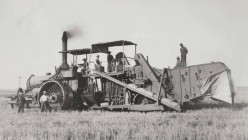
History– Where did our food come from in the past? To answer ‘how’ and ‘why’ questions about their experiences and in response to stories or events, use a wider range of vocabulary, describe events in some detail, use new vocabulary in different contexts, can comment on images of familiar situations in the past and use and understand language related to time.
Geography- Where does food come from? To know some similarities and differences between contrasting environments in this country: city and farm. To introduce the term city and know some key features in Doncaster e.g., river Don, Mansion house, Minster, shopping centre. To know some key features of a rural area (Boston Park Farm). To identify similarities and differences between a city and rural area e.g., farms, buildings, fields, woods
Geography Week- What are the features of our main street? We will be comparing data to other Reception classes in our trust based on what we find!
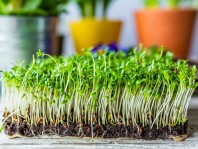
Science- Snap Science: Is all of a plant green? Children will learn about the different parts of plants and notice their similarities and differences. They will start to become familiar with the names of the main parts of a plant. They will plant, grow and care for cress.
Computing- Kapow: Using a Computer. We will be learning to name the parts of a computer including keyboard, mouse, monitor and begin to develop skills to log in and log out of a computer. We will use a mouse to track and use programmes such as paint to tinker with our new skills.
Personal, Social and Emotional Development
The Foundations Of:
PSHE–Living in the Wider World- To explore the people who help us in our community and to share ideas of how people can help to keep us safe and healthy. We will learn to understand the role of the people who help us in our community.

Expressive Arts and Design-
The Foundations Of:
Music- Charanga- Wellbeing Matters: Learn up to three songs with actions that explore different emotions and share their message through voice and non-verbal communication. Get creative with movement, music and song writing with different backing tracks to express your feelings. Explore a range of dynamics and learn to control performing them neatly together, following a leader.
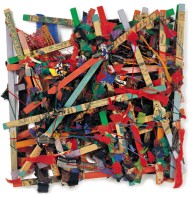
Art- Michael Brennan-Wood- Textiles: Discover that weaving is winding one material under, over, through, round another material. We will develop weaving skills to weave our final piece just like Michael!
Physical Development
PE-Get Set 4 PE-Games Unit 2
We will develop our moving skills by playing games, learning how to be part of a team and keeping score.
Our PE lesson will take place every Wednesday, children should come to school every Wednesday wearing their PE kit, with their school uniform in their bags to change into.
We will also be using our outdoor area to develop our gross motor skills. The children love to practice their running, moving, climbing and throwing skills and have access to our outdoor area every day to practice these.
Picture News
"Picture News" is a UK-based educational resource that provides schools with weekly current affairs packs, featuring a relevant photo, a "big question," and teaching materials to help children discuss real-world events, develop critical thinking, and learn about British Values, respect, and empathy in an age-appropriate way, often linking home and school learning.
Purpose of our Picture News assembly at Canon Popham:
To make the world more accessible and understandable for children.
To develop speaking, listening, and vocabulary skills.
To foster independence, drive, and a passion for learning.
To build empathy and teach children to find their own voice.
Picture News is delivered in a whole school assembly once a week with a thought-provoking question by class teacher throughout the school year. Each week in assembly, the children learn about an exciting or important story that has been in the news. They consider their responses to the story and are invited to feedback their thoughts. They reflect on each story and learn how they relate to British Values and Protected Characteristics - Equality.

Tapestry
We love see the things our children have been learning at home from your observations! A Tapestry challenge will be sent out each week on a Friday and you will have the rest of the week to complete this. If you need any support using your Tapestry account to get the most out of this wonderful platform, please ask a member of staff or use the tutorials below to help.
Information from parents meetings- feel free to drop us an email if you have any questions!
Tapestry parents information presentation
If you have any questions, please feel free to email us or give us a call!
Thank you for your support,
Miss Simpkin & Miss Oxley