
Year 6
Maths Calculations – Year 5 & 6English Information- Year 5 and 6
Year 6 Curriculum Plan 2025- 2026
Back to School Meeting September 2025
Year 6 SATS parents' information
Year 6
Summer One 2026
Welcome to the Y6 class page. Please see below for a summary of what we will be learning this half term.
Homework: Please continue to enjoy your reading each day. Reading is fun and a great way to spend time together with your family, as well as developing our imaginations. Encourage your child to talk about what they have read and ask them a question or two about the book. This will help consolidate their comprehension work in school. Adults please remember to record what your child reads at home in their reading record. We will count all entries in the reading diaries weekly and award golden tickets to those who have read 20 times or more in a month.
Our book changing day is TUESDAY.
Sats week commences on Monday 11th May- Thursday 14th May.
Maths: A CGP paper is given out each Friday and is to be handed in by the following Friday. We work through these in class, so it's very important that they are completed and brought in on time.
English- Holes by Louis Sachar
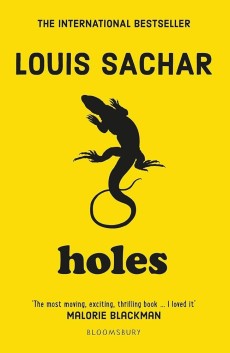
Stanley Yelnats' family has a history of bad luck, so when a miscarriage of justice sends him to Camp Green Lake Juvenile Detention Centre (which isn't green and doesn't have a lake), it's not exactly a surprise.
Every day he and the other inmates are told to dig a hole each, five foot wide by five foot deep, reporting anything they find. Why? The evil warden claims that it builds character, but this is a lie. It's up to Stanley to dig up the truth.
Writing outcome:
Descriptions, Formal letters, none chronological report, Customer review.
Maths

Measures, Position and Direction, Ratio, Algebra, Shape.
SATS revision.
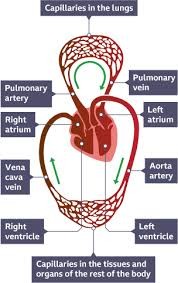
Science: Human Circulation- complete
In this module, children will learn to:
● identify and name the main parts of the human circulatory system, and describe the functions of the heart, blood vessels and blood
● describe the ways in which nutrients and water are transported within animals, including humans.
Electricity: Changing Circuits
In this module, children will learn to:
● associate the brightness of a lamp or the volume of a buzzer with the number and voltage of cells used in the circuit
● compare and give reasons for variations in how components function, including the brightness of bulbs, the loudness of buzzers and the on/off position of switches
● use recognised symbols when representing a simple circuit in a diagram.
Geography: Geography Week WC 18th May
How is land use changing in our local area?
History- Ancient Maya- Where did it all begin?
The aims of the unit for pupils are:
* To gain an overview of significant people, places and events from the Maya
Civilization
* To explore how the geography of the Maya area impacted trade, daily life and
the growth and decline of the civilization
* To consider broader historical context and draw links with British history and other
familiar aspects of world history
* To become familiar with historical sources, debates, misconceptions and accurate
vocabulary relating to the Maya Civilization
PSHE: Financial Education
Fiver Challenge: Enterprise
PE — Ultimate Frisbee (Thursdays)
If your child wears earrings, these must be removed or provide tape to cover them.
Indoors
Navy/Black shorts
White polo shirt or t-shirt (N.B. This should be a different polo shirt to any worn as part of the school uniform)
(for gymnastics, a black leotard may also be worn).
Outdoors
Tracksuits will be allowed for outdoor games in cold weather; these should not be in team colours/fashion brands.
Trainers should be worn which are robust, sturdy and intended for exercise and not fashion.
Computing Online Safety:
Design Technology: Structures- Playgrounds
French - Around Town
In this unit pupils will learn the nouns and definite articles/determiners for 10 places around a town in the foreign language. They will learn how to navigate around the town using directions and prepositions to indicate the exact position of a place in relation to another in the foreign language. Pupils will build towards performing an extended role-play in pairs acting as the tour guide, Olivia, and a tourist asking and answering where places are in the town in the foreign language.
MUSIC: Farewell Tour
If you have any questions, worries or concerns please contact me using the class email: year6@cpa.dsat.education
Thank you.
Mrs N. Clemitshaw & Mrs H. Mumford